
Palermitans call her the “Santuzza” and turn to her to ward off every kind of danger. They give thanks through ex-votos, which they bring to the sanctuary cave on Mount Pellegrino. They honor her with festivals and processions, and for centuries they have reproduced her image everywhere and in countless forms.
Palermo believes

Palermo Believes! Although it is Italy’s fifth-largest city by population, Palermo has not lost its cultural identity or popular faith. Devotion to Saint Rosalia, the city’s patron saint, remains very strong, as does participation in Holy Week rituals and the numerous local festivals held in its historic neighborhoods.
Palermo is also protected by a saint of African descent, Saint Benedict the Moor, the first Black saint of the Catholic Church and co-patron of Palermo, as well as a secular guardian figure, the Genius of Palermo, the genius loci representing the city’s soul.
These symbolic figures embody the very essence of Palermo, its history, traditions, and still-lively popular spirituality. Between faith and culture, Palermo continues to maintain a strong connection to its deepest roots, offering visitors an authentic and captivating experience.
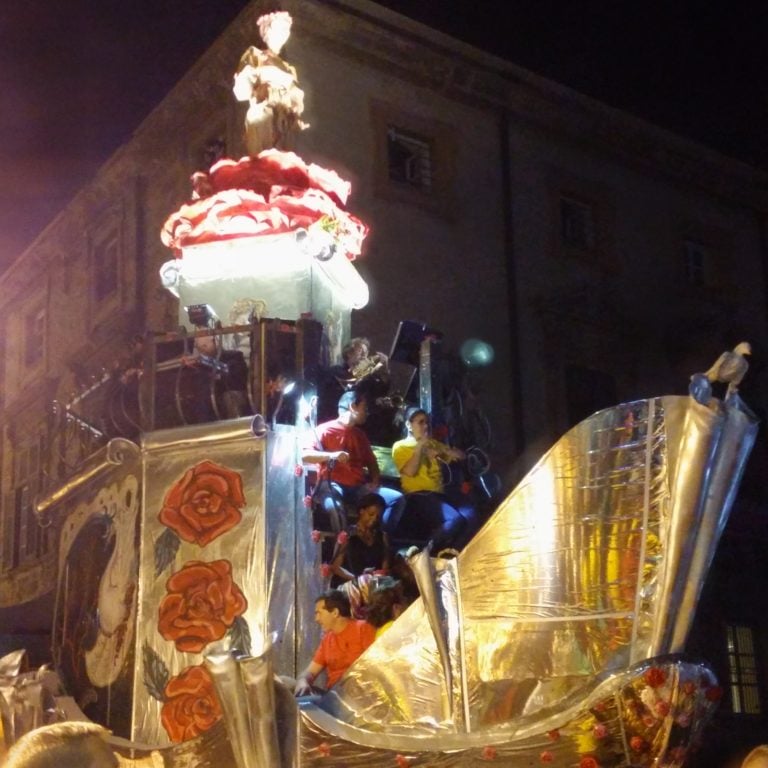
Saint Rosalia
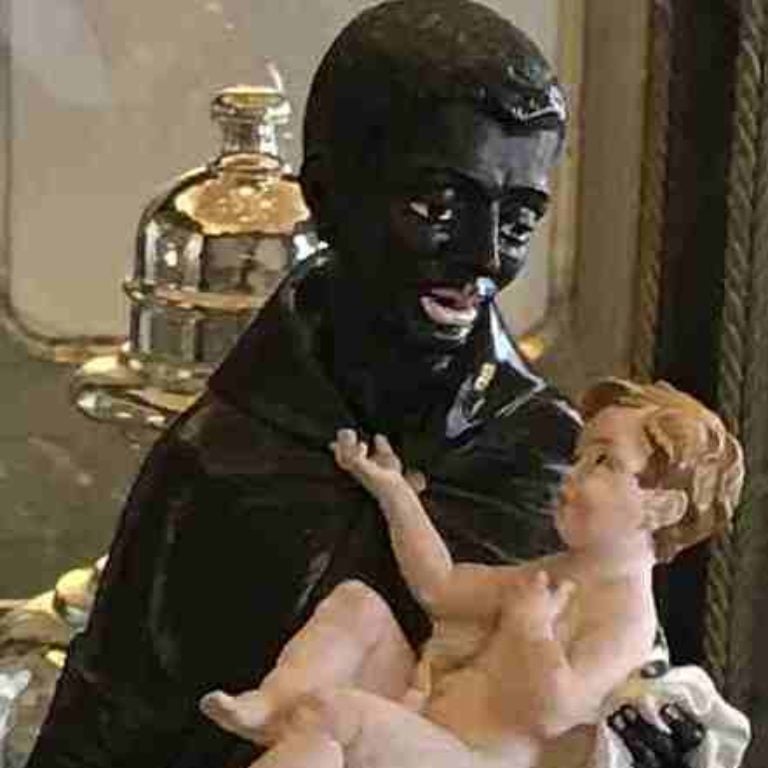
Saint Benedict the Moor
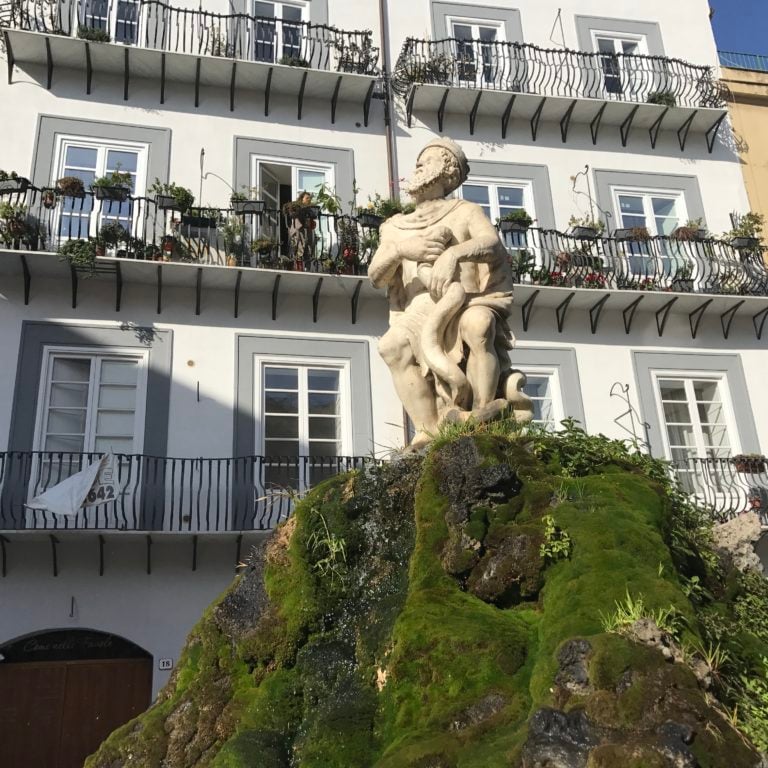
The Genius of Palermo
Saint Rosalia
Saint Benedict the Moor
Palermo, yesterday as today a land of borders and cultural exchanges, in addition to Saint Rosalia, its most famous patron saint, also invokes a saint of African origin, Saint Benedict the Moor. He was the first Black saint of the Catholic Church.
The humble son of Ethiopian slaves, he lived in the 16th century at the Convent of Santa Maria di Gesù, where his relics are still preserved today.
The Genius of Palermo
Palermo does not rely solely on the protection of the saints of the Catholic Church. It also has its own entirely secular tutelary deity, an expression of the city’s spirit: a genius loci that embodies its soul and whose roots lie in ancient Roman tradition, as well as in the myth of the Greek god Cronus, the embodiment of time.
He is depicted as a mature, bearded man with a powerful chest. A crown on his head recalls the time when Palermo, under the Normans, became the sedes corona regis, while the symbols that accompany him—a dog, an eagle, and above all a serpent biting his chest—represent the civic virtues that inspire him: loyalty, sovereignty, and the immortality of deeds worthy of glory.